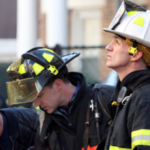
First responders prepare themselves physically for complex and chaotic situations but what about mental preparedness. Yonkers Fire Department Assistant Chief John Flynn (Masters 1501/ELP 1301) wanted to know if responders could optimize their crisis decision making through mindfulness training. He studied the predominant decision-making paradigms, frameworks, models and systems, alongside various mindfulness training programs and practices, to determine if mindfulness training would be a worthwhile means of enhancing first-responder crisis decision-making. John’s research found that mindfulness training may improve certain human factors, skills and abilities which correlate with enhanced first responder crisis decision-making, with a consequent significant improvement of outcomes during future emergencies and disasters.

The human-machine interface found in today’s complex machines introduces unprecedented opportunities for promise and peril. Jackie Lindsey (Masters 1601), currently the Cabinet Secretary at...

Why does the click-through rate on threatening headlines far exceed those that are more benign? Calling something a threat through a provocative headline or...

We live in a world where information is abundant. But in our search for truth we must be careful. Without carefully curating the quality...